John S. Rike III
Growing up in cow country and being the son of a West Texas cattle rancher, I was amazed to read about the prices being paid for good cutting horses and the prize money that “drug store cowboys” are taking home for winning various cutting horse contests (Rodeo Drive: Rich Urban Cowboys on Fine Horse, 12/16/10). It gave a slight tug at my heartstrings to think of the great cutting horses and cowboys that have come out of this part of Texas, but the horses never had the opportunity to bring the prices that they are now bringing, nor did the cowboys have an opportunity to compete for that type of prize money.
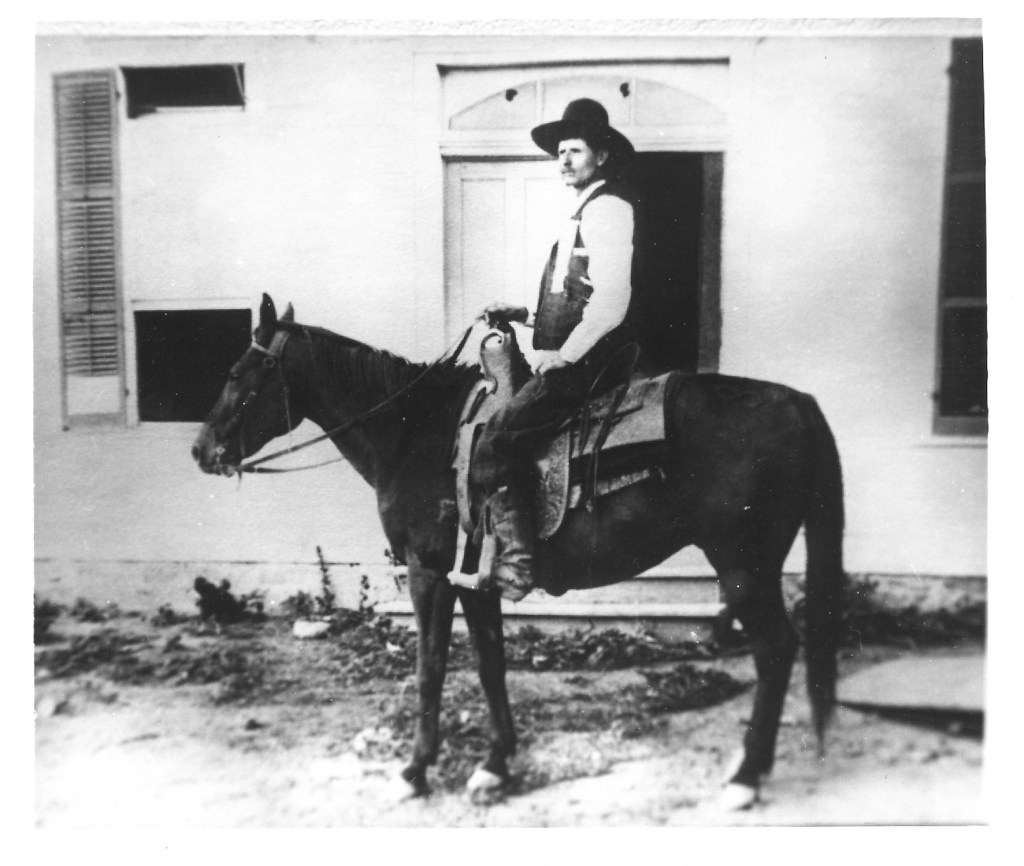
Old Hub was a 22-year-old retired cow pony who had been turned out in the cedar breaks of King County, Texas, in order to spend his final days in the peace and quiet of the Rolling Plains. His old friend, Sam Graves, inquired about Hub when it was announced that a “bigger than Texas Cowboy Reunion” would be held in Haskell, July 27-29, 1898.
Sam was told that Hub was way past his prime and on his last legs. After convincing Hub’s owner, Bud Arnett, to let him work Hub back into shape, Sam spent the next several months bringing the horse back to a competitive level. Soon Hub’s vigor and competitive spirit took over and he commenced to perform in a manner that was reminiscent of days gone by.
The three-day rodeo, reunion and celebration was advertised in newspapers as far away as Dallas and Kansas City, and some 15,000 people packed into the cow town of Haskell. The railroad had not yet been built into this community (arriving here in 1906), so visitors arrived by horseback, wagon, and hack.
Old Hub stole the show as he performed in the special attraction cutting horse contest. Sam’s brilliant horse was too old to match the great bursts of speed of the younger mounts, but with split second maneuvers, always ahead of his charge, Hub’s performance resembled that of a great broken-field runner in a football stadium. He even blocked an obstinate steer with a front foot when necessary.
Hub won the contest as the “Best Cutting Horse in the West,” and the president of the Cowboy Reunion talked Sam into letting Hub do an exhibition without the use of a bridle. Hub performed without bridle, bits, or a hackamore as well as he had performed the day before during the rodeo contest.
So, what was Hub and Sam’s reward for being the Grand Champion Cutter at that 1898 Cowboy Reunion and Rodeo? Would you believe, $150?
Sources: The Big Ranch Country, J.W. Williams, Terry Brothers Publishing: Wichita Falls, 1954; nchacutting.com/about-us/history.

